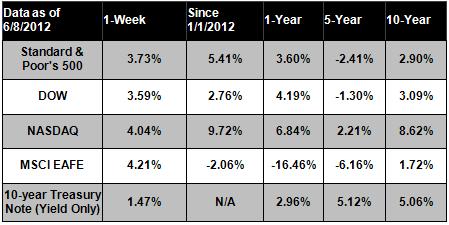
The Markets:
After
the sustained selloff in previous trading sessions, the markets rallied
Friday to claim a strong gain for the week. The S&P and Dow both
booked a 0.8% gain, while the Nasdaq rose 1.0%.[1]
With the choppy market performance and gloomy economic sentiment we've
seen in the past weeks, we wanted to spend some time discussing recent
trends and what they might mean for the future.
In
short, many of the problems that plagued the markets in 2010 and 2011 -
a serious European debt crisis and recession, a slowing Chinese
economy, slow domestic growth, and the looming expiration of Bush-era
tax cuts - are still with us in 2012. The uncertainty around these
issues has dealt investor sentiment a major blow and spurred an exodus
from equities into bonds and other "safe haven" investments, pushing
Treasury yields to record lows similar to levels seen in the 2008
crisis. There's a real current of fear underlying these moves that the
global economy is slipping back into recession.
Whether
this fear is realized depends largely on how the credit crisis in Europe
develops. Things may be looking up (at least temporarily) as Eurozone
leaders have pledged to lend Spain up to 100 billion euros (approx. $125
billion) to recapitalize its banks, pending an audit this month. By
pumping more liquidity into the economy, policymakers have bought
themselves a bit more time to find a solution.[2] We hope that markets will react positively to the news this week.
Domestically,
many people are worrying about whether 2012 will be a repeat of the
last two years, where an initially promising start fizzled out in the
spring. Economic data has been patchy at best, and employment growth
seems to have lost steam over the past few months, with not nearly
enough jobs created to sustain continued growth. At this point, we can't
be sure if this is just a temporary slowdown or a sign of continued
economic contraction. Based on a number of factors, we currently suspect
that this is a temporary, cyclical slowdown and that job growth will
pick up in the latter half of the year. Supporting this belief, the
Fed's most recent Beige Book report stated that U.S. economic growth
picked up over the last two months, and hiring showed signs of a "modest
increase," indicating that the situation is not as grim as many
originally feared.[3]
With
respect to equity markets, we know that historically, the market
suffers one 10% (or greater) market correction each year. The S&P
briefly touched an intraday correction of 10%, so does that mean we can
expect solid growth going forward? It's impossible to know for sure, but
it's rare to see the kind of persistent selling pressure that we've
seen for the last month, where, for example, the Dow experienced 17
losses in 22 trading sessions. This lingering weakness has resulted in
very pessimistic investor sentiment that may set markets up for a
positive rebound. Additionally, we're also under the effect of typical
Presidential Election year trends, which historically have called for a
peak in April and a decline in June, a script the markets have followed
closely this year. If the cyclical trend continues, we can expect a new
burst of energy in the second half of the year.
ECONOMIC CALENDAR:
Tuesday: Import and Export Prices, Treasury Budget
Wednesday: Producer Price Index, Retail Sales, Business Inventories, EIA Petroleum Status Report
Thursday: Consumer Price Index, Jobless Claims
Friday: Empire State Mfg. Survey, Treasury International Capital, Industrial Production, Consumer Sentiment
|